Indian Haircut in London Ontario
The art of the haircut transcends a simple snip; it’s a tailored experience, especially when dealing with the unique texture, volume, and growth patterns typical of Indian hair. In London Ontario, a community of specialized hair professionals understands that Indian hair—often thick, strong, and dark—requires specific techniques for optimal layering, shaping, and managing volume. This dedicated page serves as your comprehensive guide to finding the best salons and stylists offering expert Indian haircut services designed to complement your features, lifestyle, and hair health.
The Specialized Approach to Indian Hair
Indian hair is renowned globally for its natural thickness and strength, but this also means it requires a specific technical approach that differs from cutting finer hair types. A generic haircut may lead to the dreaded "triangle effect" or excessive bulk at the ends. Skilled stylists specializing in South Asian hair use specific cutting techniques to eliminate bulk, create internal movement, and ensure the hair falls beautifully and naturally.
Key techniques often utilized include deep point cutting, slicing, and specialized layering to distribute the hair's weight evenly throughout the head. This meticulous approach prevents the style from becoming heavy or unmanageable. Furthermore, many salons catering to this clientele also offer traditional treatments like deep oil massages and herbal hair masks, which are integral to maintaining the lush health and signature shine of Indian hair. Choosing a salon that understands these nuances is the first step toward achieving a truly flattering and easy-to-manage style. Whether you are seeking classic V-cuts, sharp blunt bobs, or modern layered styles like the butterfly cut, the right professional ensures precision and longevity.
Trusted Service Providers for Indian Hair Styling
TOWNIN.COM is dedicated to listing the most reliable and highly-regarded local businesses. Below, you will find a curated list of companies that offer exceptional haircut and styling services, many of which are known for their expertise in handling thick and textured hair. Our commitment to accuracy means some of the listings on TOWNIN.COM have been verified through various methods, including field visits or telephonic confirmation, ensuring you connect with verified, professional service providers.
London Barber Huts 1560 Dundas Street, Dundas Square Plaza, London, Ontario, ON N5W 3C1. Phone number: 519-451-2345
Sabri Hair Studio
770 Exeter Road
Phone number: 519-913-3929
Sarita's Beaute Spa
585 Sprucewood drive, London, ON N5X 4J5, Canada
Phone number: (226) 637-2220
Essense Salon & Sanctuary
405 Wharncliffe Rd. South, London, Ontario N6J 2M3
Phone number: 519-858-0362
Maria Bikas Salon
1673 Richmond St., London. Ontario, Canada. N6G 2N3
Phone number: (519) 858-2000
Elite Hair and Beauty
1133 Commissioners Rd E #1, London, ON N5Z 4W5, Canada
Phone number: (519) 685-6677
Cutting Edge Hair Salon
245 Wharncliffe Rd N, London, ON N6H 2B4, Canada
Phone number: (519) 438-6622
The Studio Hair Salon & Spa
784 Richmond St, London, ON N6A 3H4, Canada
Phone number: (519) 434-2191
Salon Entrenous
595 Fanshawe Park Rd W, London, ON N6G 4J6, Canada
Phone number: (519) 660-6600
Tangles Hair Salon
785 Wonderland Rd S, London, ON N6K 1M6, Canada
Phone number: (519) 657-3777
Hair Artisans
573 Richmond St, London, ON N6A 3G2, Canada
Phone number: (519) 642-1323
In-Depth Guide to Indian Hair Services and Maintenance
Achieving and maintaining a perfect look for Indian hair involves understanding the types of cuts, styling options, and traditional care methods available in the community.
Different Types of Precision Cuts for Volume and Flow
Stylists who specialize in Indian hair focus on cuts that manage weight while maximizing natural movement. The sheer density of this hair type means that classic styles require significant modification.
The Classic Layered Cut is a foundational style. For thick Indian hair, these layers are strategically placed higher up the head and texturized internally, not just at the ends, to prevent the cut from looking too blocky or heavy. This technique ensures a beautiful, cascading flow and is ideal for women with long or medium-length hair. The Feather Cut is another popular variation, where layers are created using a slicing technique, making the ends appear soft and airy like feathers, which enhances volume without adding weight.
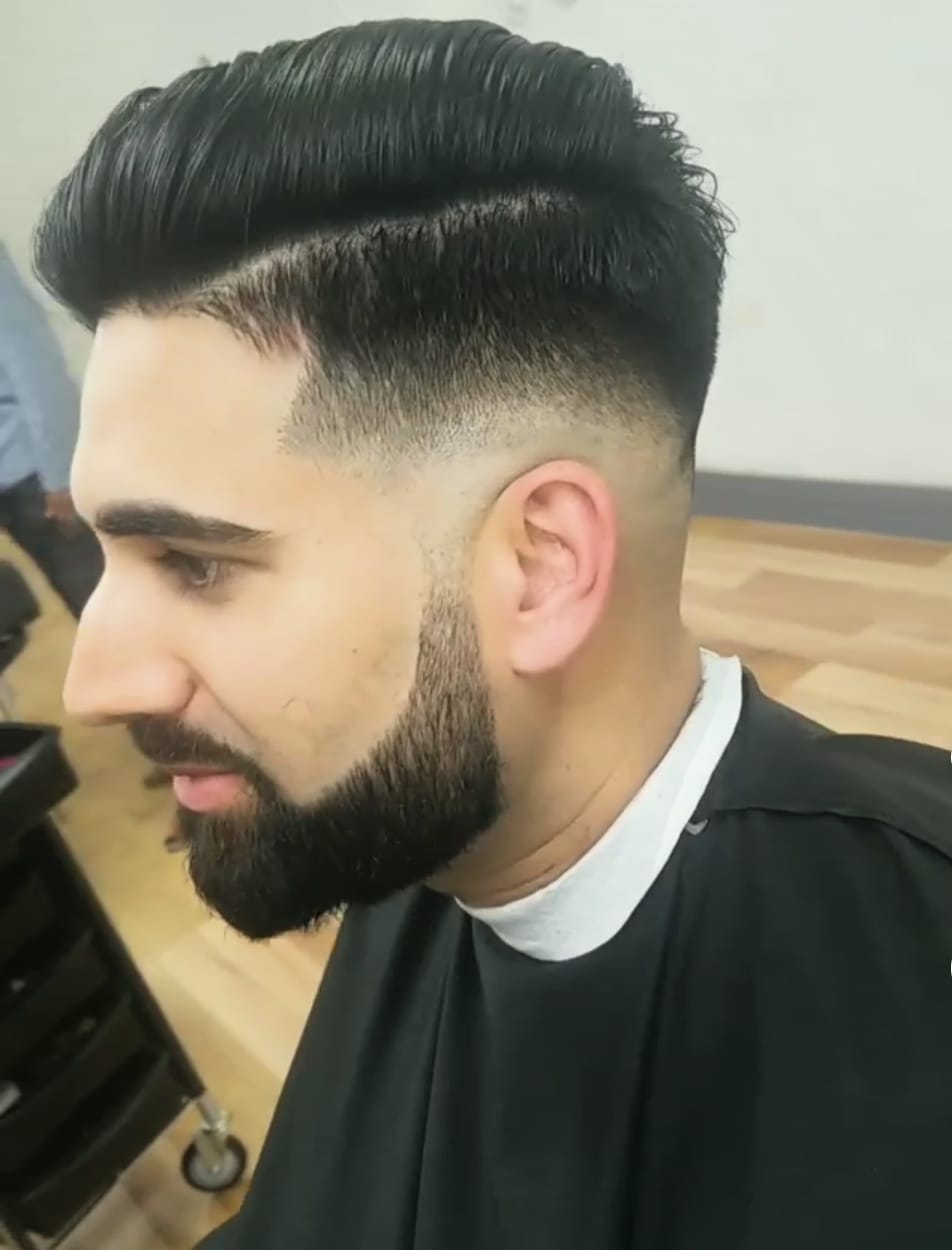
For a shorter, bolder look, the Blunt Bob must be approached with caution. A typical blunt cut can look too voluminous on thick hair. Professionals adapt this by undercutting the bob or using a razor technique on the inner layers to thin the bulk while keeping the sharp outline. This provides the desired sleek, defined look without the triangular shape. Men often opt for styles like the Quiff or Pompadour which leverage the natural thickness for height and volume, combined with a clean, low-to-mid fade to control the sides. A key question for your stylist is What specialized thinning technique do you use to maintain the ends of my thick hair without causing frizz?
Availability of Traditional Indian Hair Treatments
Many London Ontario salons offer specialized treatments rooted in traditional Indian hair care practices, which emphasize scalp health and deep nourishment. These treatments are essential for counteracting the effects of heat styling, chemical treatments, and environmental stress.
One of the most sought-after services is the Hot Oil Head Massage (Abhyanga). This involves warming natural oils, such as coconut, almond, or Bhringraj oil, and massaging them deeply into the scalp. This practice not only provides immense relaxation but also stimulates blood circulation to the hair follicles, which is scientifically linked to promoting hair growth and strengthening the roots.
Salons also offer customized Herbal Hair Masks using traditional ingredients like Amla (Indian gooseberry), Shikakai, and Reetha. Amla is particularly rich in Vitamin C and antioxidants, helping to maintain natural pigment and shine. These masks are blended to address specific concerns, such as dandruff, hair fall, or lack of luster. After a meticulous application, the hair is often wrapped in a warm towel to ensure maximum nutrient absorption. When considering a treatment, a good question to ask is Which traditional herbal mask is best recommended for reducing hair fall and improving shine?
Best Sources for Premium Hair Care Products in London Ontario
While professional services lay the foundation, maintaining the results at home requires using the right products tailored to Indian hair. The best sources are often the local salons themselves.
Many expert London salons carry professional-grade product lines that are specifically formulated for managing thick, coarse, or textured hair. These products often feature high concentrations of natural oils, keratin, and essential proteins, which deeply hydrate and prevent breakage. Look for shampoos and conditioners that are sulfate-free and paraben-free, as these chemicals can strip the natural moisture barrier of thick hair, leading to dryness and frizz.
Beyond the salon, specialized South Asian grocery stores or health and wellness boutiques may carry authentic Ayurvedic oils and herbal powders (like Henna for natural conditioning or coloring). However, for everyday modern styling products, purchasing from your trusted stylist ensures you get products that are compatible with your cut and the local climate. Ask your stylist Where can I find a high-quality, sulfate-free shampoo that is also effective at cleansing a very oily scalp?
Best Practices for Styling and Home Hair Maintenance in London Ontario
A successful haircut is only as good as the maintenance routine that follows. Specific practices help manage the natural volume and prevent damage to strong, yet sometimes fragile, Indian hair.
Washing and Drying: Due to its thickness, Indian hair can take a long time to dry. It's crucial to minimize friction during the process. After washing with a mild cleanser, use a microfiber towel or a soft cotton t-shirt to gently squeeze out excess water. Avoid vigorous rubbing, as this is a primary cause of frizz and breakage. Always apply a heat protectant spray before using any blow dryer or hot tools. A key technique is to roughly dry the hair until it’s about 70-80% dry, then let it air dry the rest of the way to reduce heat exposure.
Combing and Detangling: Never comb soaking wet hair, as it is most vulnerable to damage. Wait until it is damp. Use a wide-toothed wooden comb—a traditional favorite—starting from the ends and slowly working your way up to the roots. Wooden combs are preferred because they create less static electricity than plastic, helping to reduce frizz. A relevant question for ongoing care is What is the best way to safely detangle my hair in the mornings without causing breakage?
Guidance on Colouring and Chemical Treatments in London Ontario
Indian hair responds differently to colour and chemical treatments due to its inherent pigment and cuticle structure. A specialist’s expertise is vital here.
The dark, rich pigment of Indian hair means that achieving lighter shades, like blonde or light brown, requires a more intensive and carefully controlled lifting process. This often involves multiple stages of bleaching and toning, which can be damaging if not executed by a professional experienced with this hair type. An experienced colourist will use high-quality bond-strengthening treatments (like Olaplex or similar systems) to protect the hair’s integrity during the lightening process.
For chemical services like Keratin Treatments or Hair Smoothening, the goal is often to reduce frizz and manage the hair's volume while preserving its natural health. The treatment formula and processing time must be calibrated precisely for thicker hair to ensure the results are sleek but not limp. Always request a detailed consultation to discuss the level of volume you wish to retain. Ask your colourist How can I lighten my hair by two shades with minimal damage to the cuticle?
Frequently Asked Questions (FAQ) in London Ontario
What is the recommended frequency for a professional haircut
For medium to long layered styles, a trim every 8 to 12 weeks is typically sufficient to maintain the shape and remove split ends, while shorter cuts may require appointments every 4 to 6 weeks for precision
Is deep conditioning necessary for naturally thick hair
Yes, deep conditioning is highly beneficial. Although the hair is strong, its thickness often makes it more prone to dryness, especially at the ends. A weekly or bi-weekly deep conditioning treatment helps replenish moisture and maintain elasticity
How does a V-cut differ from a U-cut in layering
Both are layered styles at the back, but the V-cut creates a more dramatic, sharp point at the centre back, whereas the U-cut creates a softer, more rounded curve, both of which are effective for distributing the bulk of thick hair
Can excessive oiling cause hair fall
Excessive oiling itself does not cause hair fall, but leaving the oil on the scalp for too long (e g, more than 8-12 hours) can attract dust and lead to product buildup, which can clog follicles and be detrimental to scalp health if not properly cleansed
What is the best way to control frizz in humid weather
To control frizz, use an anti-frizz serum or a light hair oil on damp hair before styling. Focusing on smoothing the hair cuticle and avoiding excessive heat and friction during drying are key practices
Are there specific products to enhance the natural shine of dark hair
Yes, look for products containing natural ingredients like Argan oil, Amla, or Coconut oil, as these are known to coat the hair shaft and reflect light, significantly enhancing the natural, deep shine of dark hair
What should I discuss with my stylist before a major hair colour change
Before any major colour change, you must discuss your hair history (previous chemical treatments), the desired level of lift, and the aftercare routine to ensure the health and integrity of your hair during and after the process
Do I need a separate shampoo and conditioner for my hair type
It is highly recommended to use a shampoo and conditioner specifically formulated for your hair type (e g, for colour-treated, dry, or damaged hair) as these products are designed to address the unique needs of your hair texture
How can I maintain volume in my hair after a heavy layering cut
To maintain volume, use a volumizing mousse or root lifter when hair is damp, and then blow-dry using a round brush, lifting the hair at the roots. You can also switch your part from time to time
What are the signs that I need a professional trim immediately
The primary signs you need a professional trim are significant split ends, a loss of the defined shape of your style, and the ends of your hair becoming noticeably thin, brittle, or difficult to manage